
Checking your swing mooring with a mini tank: what NSW and Queensland require, and what you can see yourself
NSW wants a private mooring serviced every 12 months and Queensland a yearly inspection. Where a quick look with a small tank fits in, and where it does not.
Updated 18 October 2026 · 3 min read · by the OXSEA team
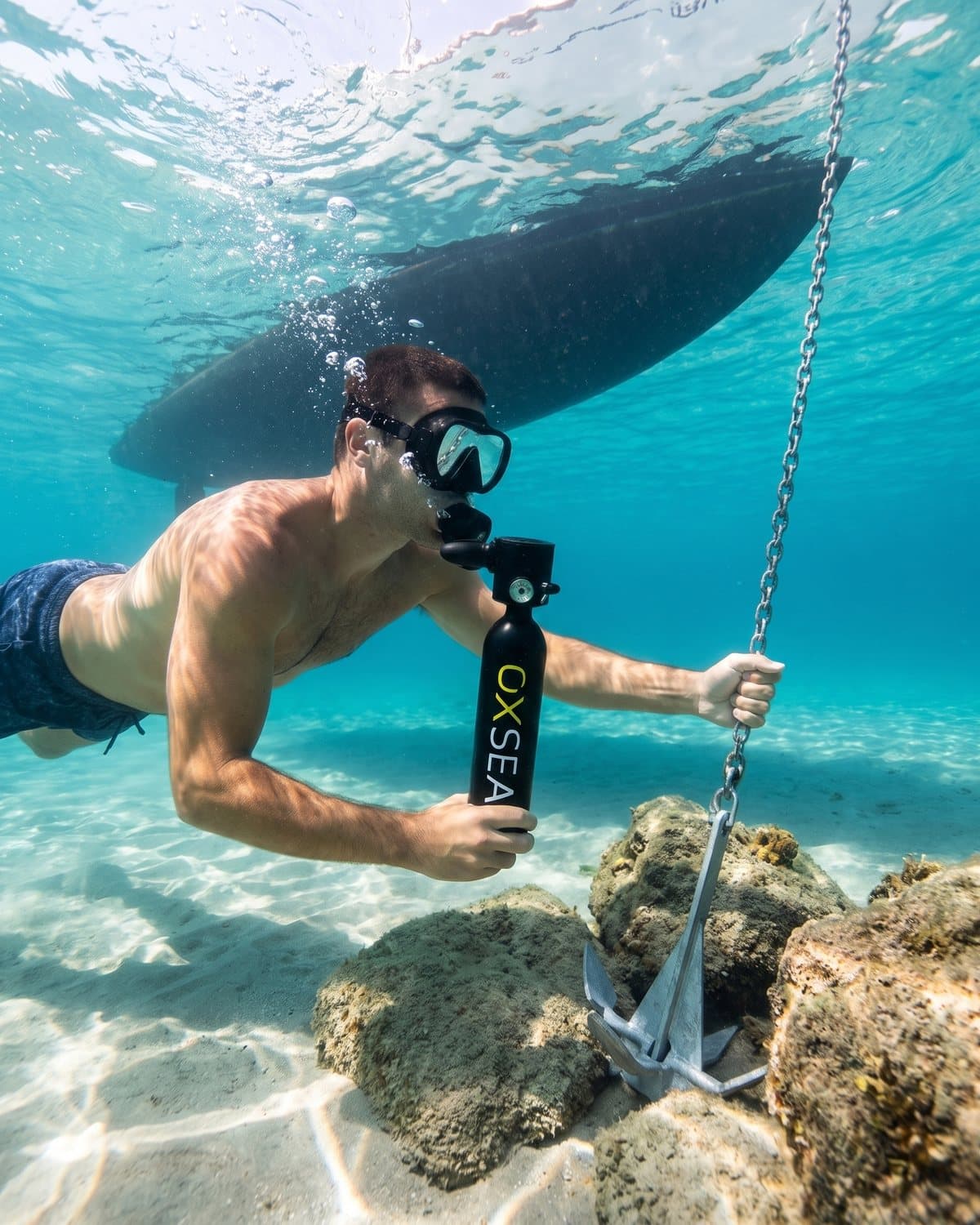
A swing mooring sits out of sight for months, then one storm tests every link of it at once. The rules in NSW and Queensland ask for a yearly service or inspection. In between, a quick look at the top of the gear tells you a lot, and that is where a mini tank is handy.
What the rules ask for
New South Wales. Transport for NSW requires the mooring apparatus to be serviced every 12 months, or more often if your mooring has specific conditions. You must be able to show proof of service when asked. That can be an invoice from a mooring contractor showing their name and ABN, the mooring ID and the date. If you service the mooring yourself, the proof is a statutory declaration. Boating Safety Officers run audits: you get a letter a month ahead, and any defect found has to be fixed, or the vessel removed and the mooring given up.
Queensland. Maritime Safety Queensland asks buoy mooring authority holders to keep the mooring safe and serviceable, to inspect it at least once a year for defects, and to have a competent person inspect the infrastructure yearly, declare it fit for purpose and confirm it is at the approved GPS position. A written condition report is needed each time the authority is renewed. MSQ also suggests visual checks in between, for example every three months and after a storm or a flood.
Other states and marine parks have their own conditions. Check yours on your mooring licence or authority.
What a quick look can tell you
The parts that wear fastest are often the ones nearest the surface: the pick-up line, the bridle, the swivel and the shackles at the top of the riser chain. With a small tank you can go down the riser and look closely without rushing.
- Shackles. Is the pin still moused (wired or tied so it cannot unscrew)? Is the bow worn thin where it rubs?
- Swivel. Does it still turn? A seized swivel twists the chain and the line.
- Chain. Look at the links where they rub on each other. Compare a worn link with one that has not been working: a visible loss of thickness is the sign to call the contractor.
- Pick-up line and bridle. Chafe, broken strands, marine growth hiding damage.
- Growth. Heavy weed and shell on the top chain adds weight and hides wear. Note it for the next service.
Take a photo or a short video with a waterproof phone or camera. If something looks wrong, your contractor knows what to bring before they come out.
Where to stop
A mini tank is made for time near the surface. Near the surface and at rest, the 0.5 L tanks give up to 8 minutes, the 1 L OX1000 around 15 and the 2.3 L OX2000 20 to 25. Many moorings sit in water deep enough that the block or the screw anchor on the bottom is out of that range. Leave the bottom gear, the ground chain and any lifting to a mooring contractor with the right equipment. That is also what the yearly service is for.
The usual rules apply: breathe continuously, never hold your breath on the way up, ascend slowly, and do not go down a chain in a current you cannot swim against. Our safety guide covers them.
Fly a dive flag while you are in the water. Our dive flag guide has the distances other boats must keep in each state.
North of the Boyne River in Queensland and across the Top End, read our crocodile country guide before getting in at a mooring. In the tropics from November to May, our stinger season guide applies too.
Sources
- Transport for NSW, Suitable vessels, apparatus, installation and maintenance, Private mooring licence conditions and Mooring audits
- Maritime Safety Queensland, Buoy moorings and the buoy mooring authority conditions
This guide is general information. Your mooring licence or authority conditions are what count.
The range
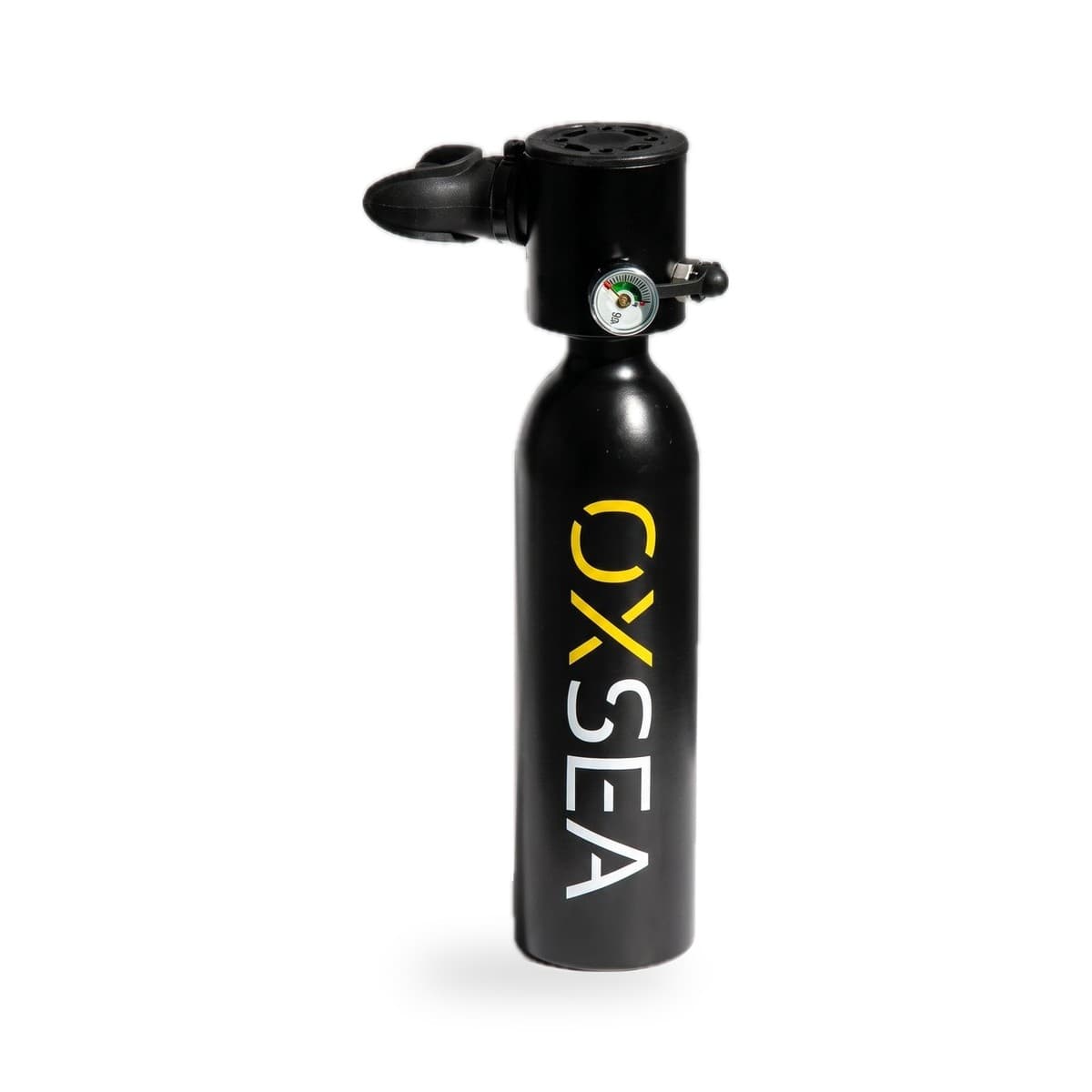
OX500
0.5 L, held in the mouth, up to 8 minutes
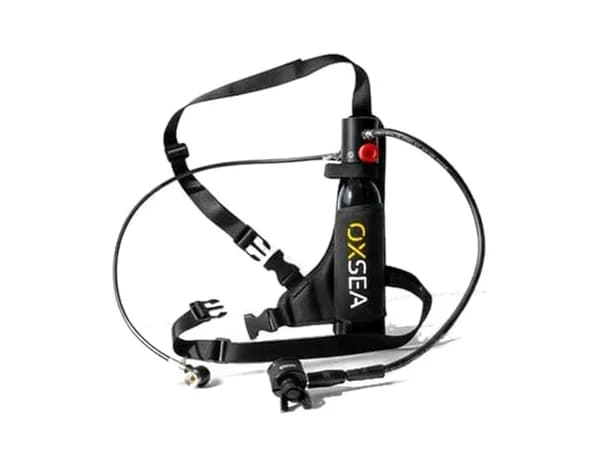
OX500Plus
0.5 L, in the mouth or on your back
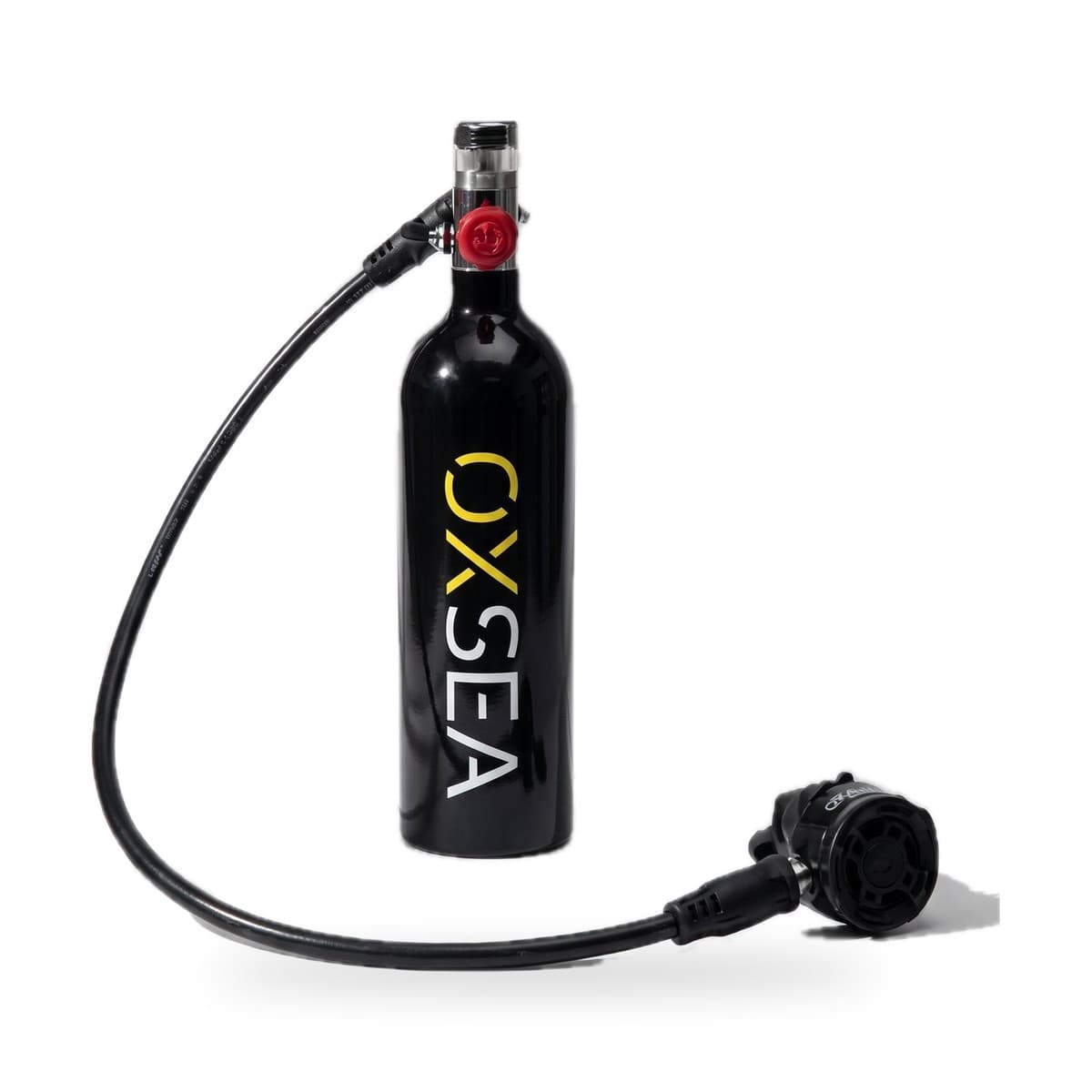
OX1000
1 L on your back, about 15 minutes
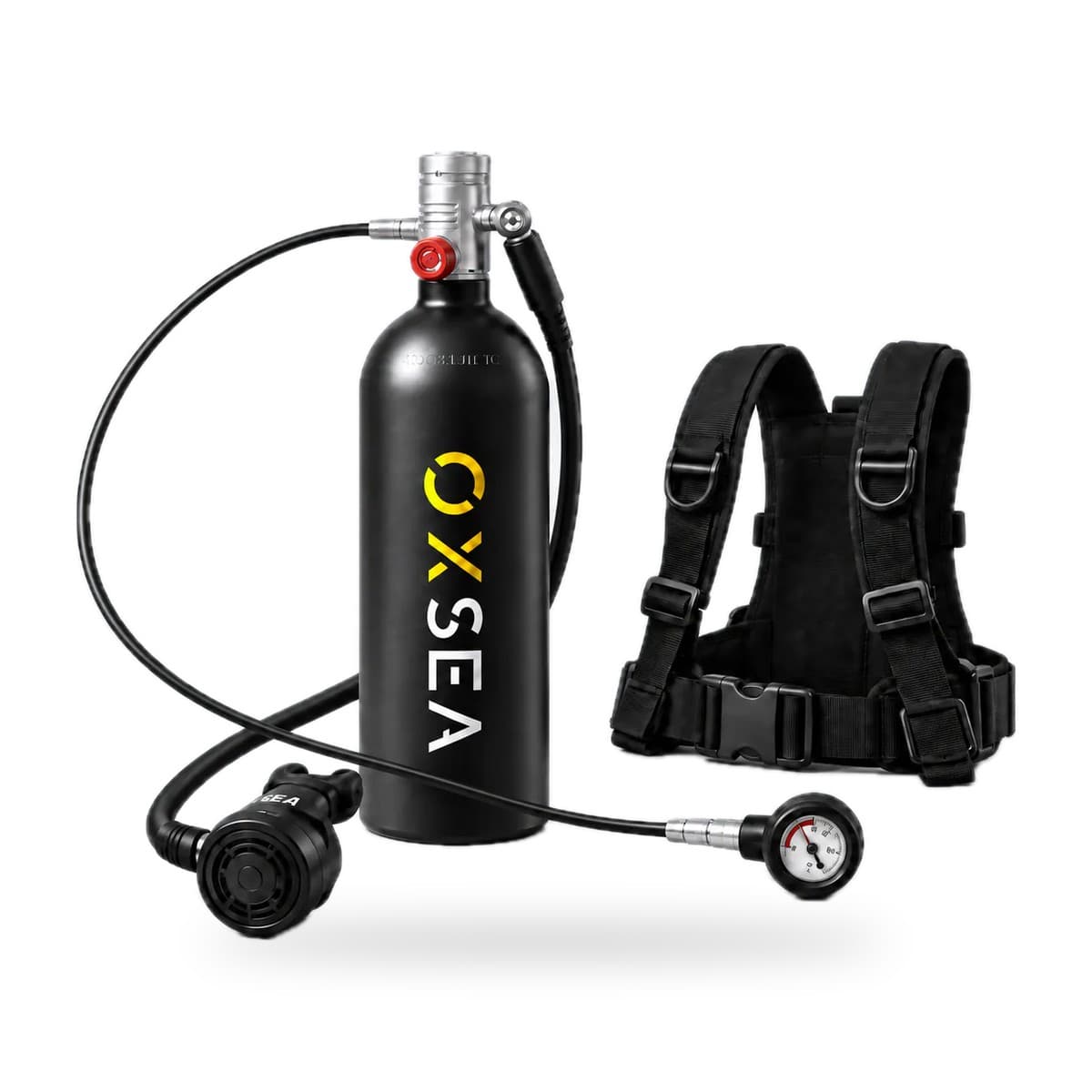
OX2000
2.3 L on your back, 20 to 25 minutes
Which OXSEA mini scuba tank? OX500, OX500Plus, OX1000 and OX2000 compared