
Great Barrier Reef and Ningaloo zones: where you can use a mini scuba tank, and where you can drop anchor
Diving and snorkelling are allowed in most marine park zones, green zones included. What changes by zone, where you cannot go, and the anchoring rules.
Updated 18 October 2026 · 3 min read · by the OXSEA team
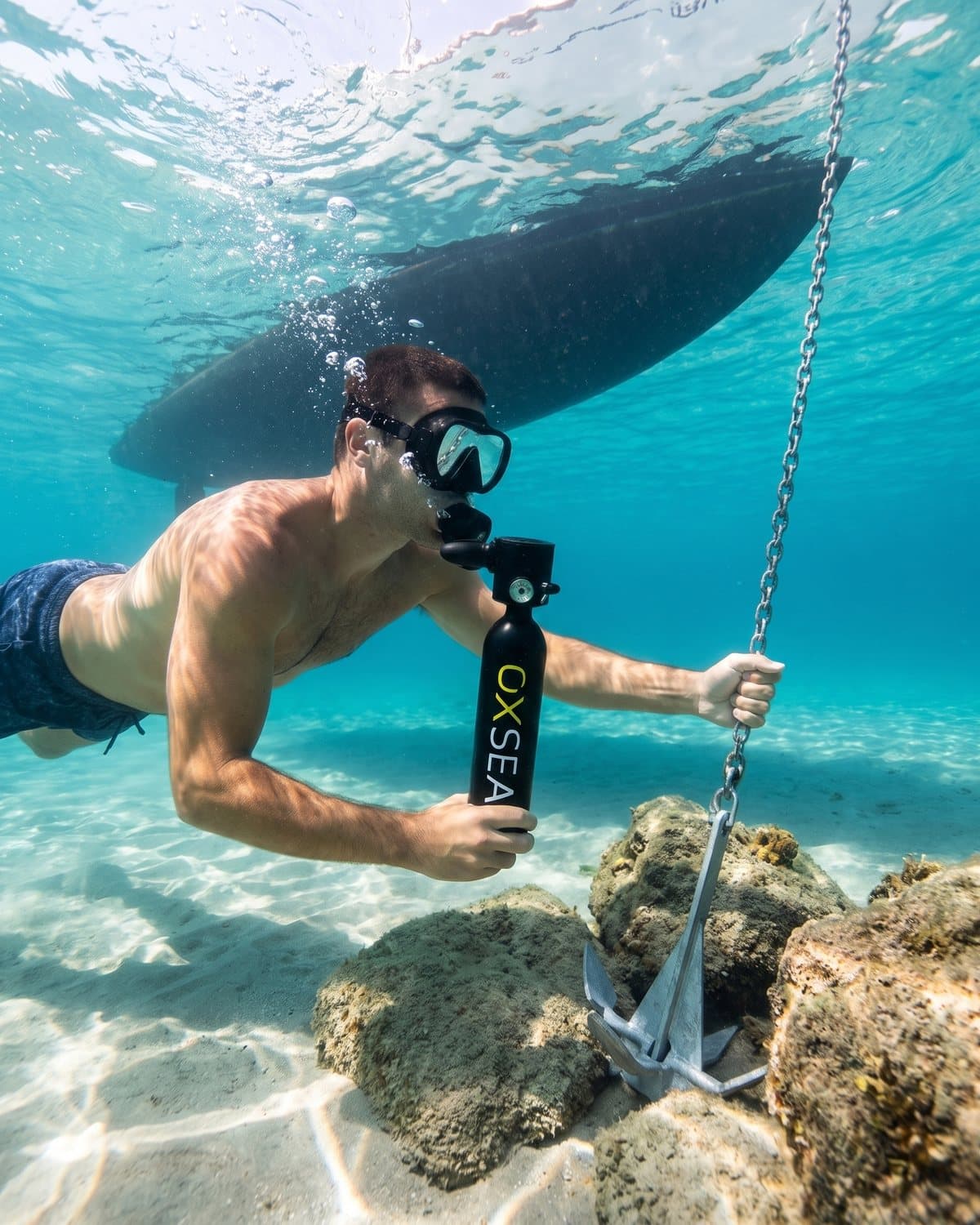
The two marine parks most of our Australian customers head for are the Great Barrier Reef and Ningaloo. Both are zoned, and the zones decide what you can do. The good news for anyone with a mini tank: looking is allowed almost everywhere. Taking is what the zones control.
Great Barrier Reef: the colours on the map
The Great Barrier Reef Marine Park Authority (GBRMPA) splits the park into colour-coded zones. For someone snorkelling or diving with a small tank, the main ones work like this:
| Zone | Share of the park | Swimming, snorkelling, diving | Fishing and collecting |
|---|---|---|---|
| Habitat Protection (dark blue) | About 28% | Yes | Limited fishing |
| Conservation Park (yellow) | Yes | Limited, with extra restrictions | |
| Marine National Park (green) | About 33% | Yes | No, it is a no-take zone |
| Scientific Research (orange), where open to the public | Yes | No | |
| Preservation (pink) | Less than 1% | No entry without a permit | No |
So the green zones, which cover a third of the park, are open to you and your tank. You simply cannot fish or collect anything there. The pink Preservation zones are the exception: no boating, no diving, no snorkelling without a permit.
Zone boundaries do not show on the water. GBRMPA publishes free zoning maps; check yours before you leave the ramp.
Ningaloo: sanctuary zones are for looking
The WA parks service describes Ningaloo's sanctuary zones as "look but don't take" areas. Snorkelling is permitted, and the kayak and snorkel moorings at Bundegi, Tantabiddi, Osprey and Maud (Coral Bay) all sit inside sanctuary zones. No fishing of any kind is allowed in them, including spearfishing. Outside the sanctuaries, recreation zones allow fishing in designated areas.
One more Ningaloo rule if you carry a speargun: Western Australia bans spearfishing on compressed air in parts of the park, and a mini tank counts as compressed air. Our spearfishing guide has the state by state detail.
Anchoring on the reef
This is where boat owners get caught, and where a mini tank earns its place on board.
- Reef protection markers. On the Great Barrier Reef, a line of white pyramid-shaped buoys with a blue Marine Parks symbol marks a no-anchoring area. You cannot anchor inshore of the imaginary line between them. You can only cross it to reach a mooring or the beach.
- Public moorings. Blue cone-shaped buoys with a coloured band. The band shows the vessel length class and the maximum wind strength for that mooring. Use them where they exist.
- Everywhere else, anchoring is generally allowed, and the advice is to drop in sand or mud, away from coral.
From the boat, it is hard to see whether the pick has landed in sand or snagged a coral head. A two-minute look with a small tank answers it: you go down the chain, check the anchor, move it by hand if it is too close to the reef, and come back up. Same when the anchor is stuck: freeing it by hand is kinder to the reef than motoring over it.
Good habits on the reef with a tank
- Keep off the coral. Do not stand, kneel or hold on to it. With a tank you stay longer near the bottom, so watch your fins.
- Stay shallow. Our tanks are made for time near the surface: up to 8 minutes for the 0.5 L tanks, around 15 for the OX1000 and 20 to 25 for the OX2000, at rest. Effort and depth shorten that.
- Breathe continuously and never hold your breath on the way up. Ascend slowly. Our safety guide goes through the rules.
- Check the season. From November to May, tropical waters bring box jellyfish and Irukandji. Read our stinger season guide before a summer trip north.
- Fly a dive flag when someone is in the water near the boat.
Sources
- Great Barrier Reef Marine Park Authority, Interpreting zones and Zoning maps
- Queensland Parks and Wildlife Service, Caring for the Reef
- Great Barrier Reef Marine Park Authority, Responsible Reef Practices
- Parks and Wildlife Service WA, Ningaloo Marine Park and the Nyinggulu (Ningaloo) Coast visitor guide
Zoning and anchoring rules can change. Check the current maps before each trip.
The range
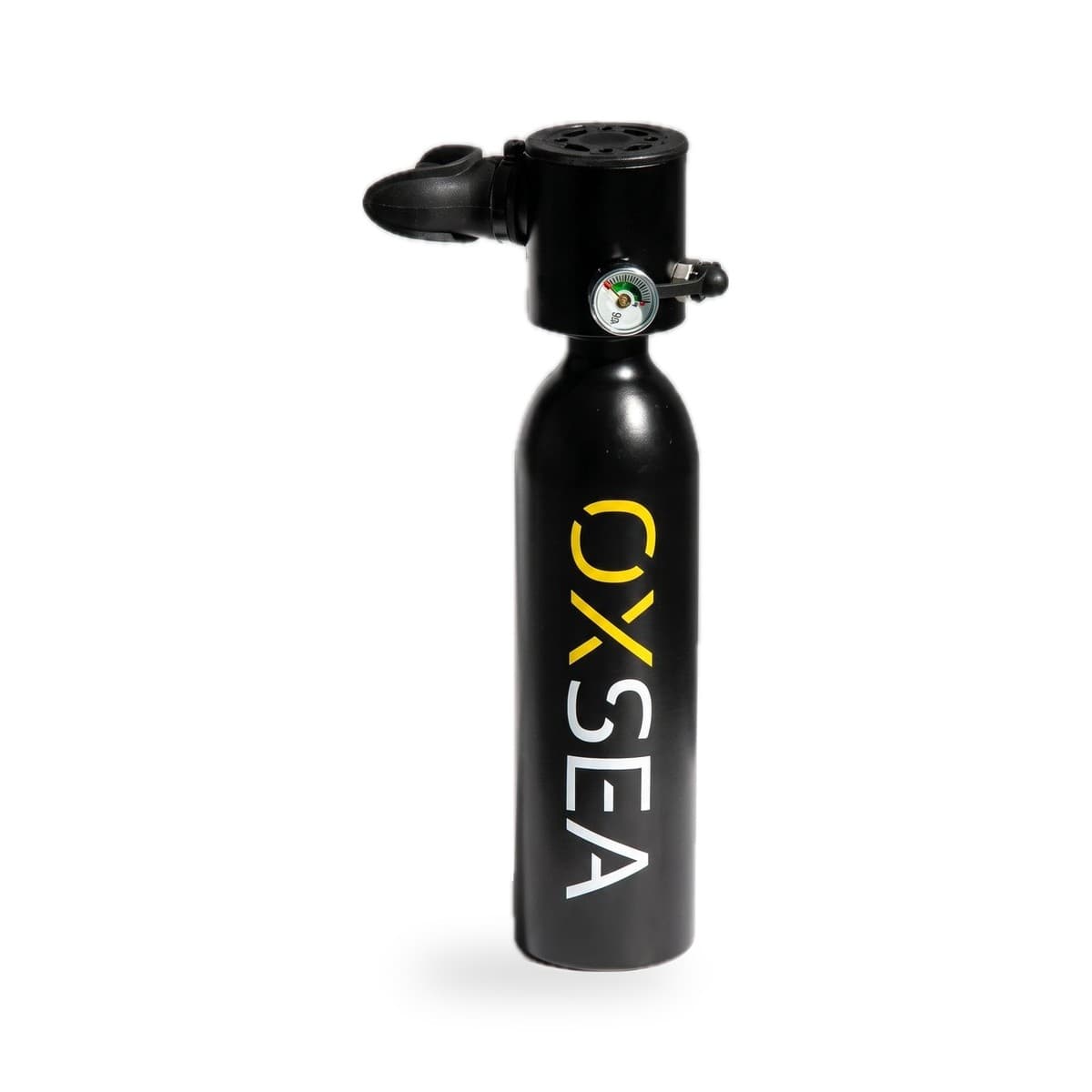
OX500
0.5 L, held in the mouth, up to 8 minutes
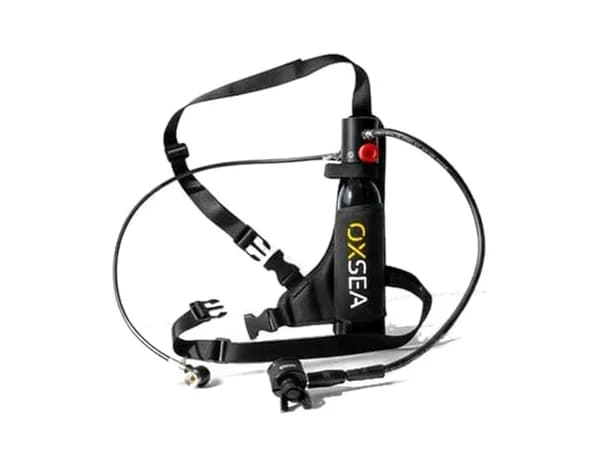
OX500Plus
0.5 L, in the mouth or on your back
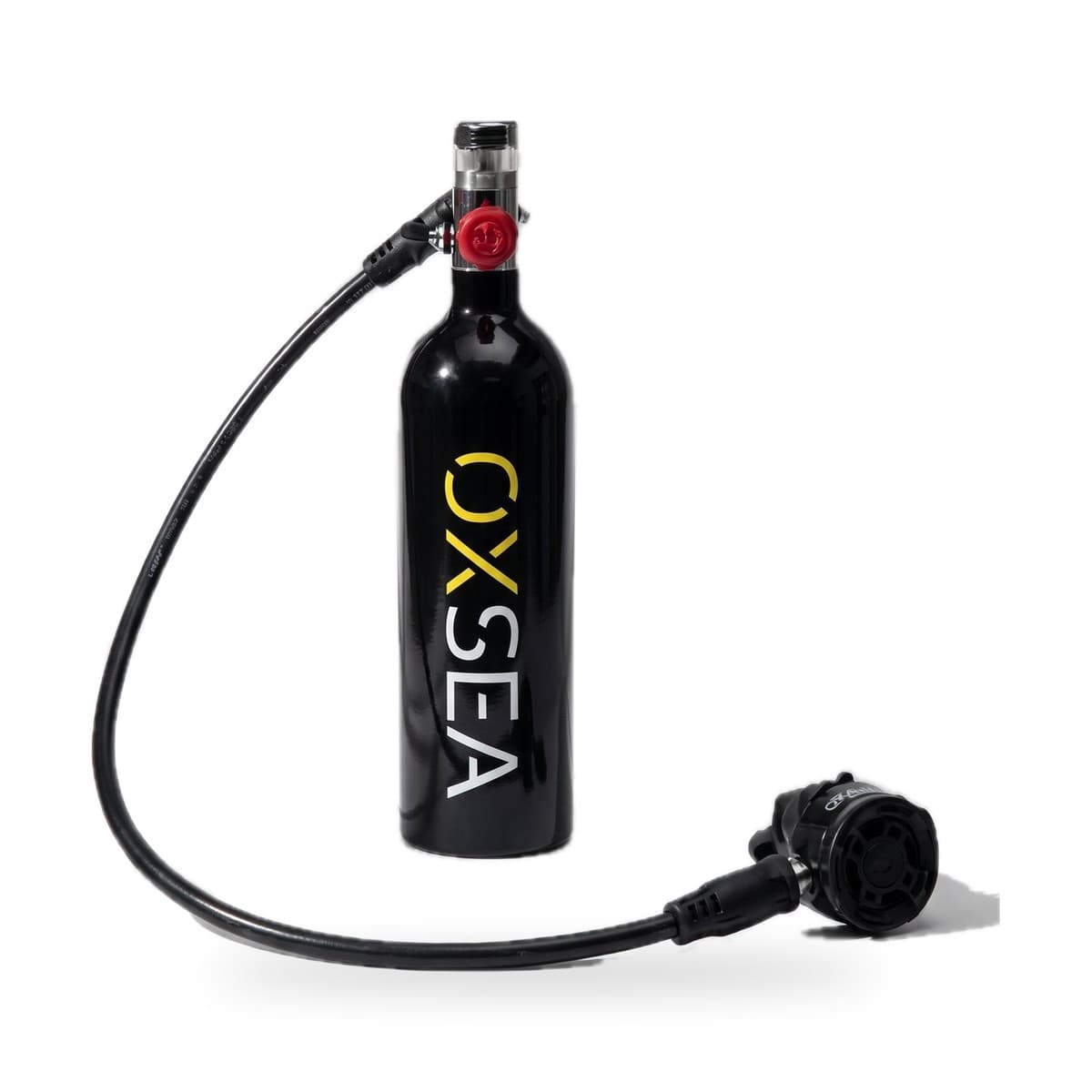
OX1000
1 L on your back, about 15 minutes
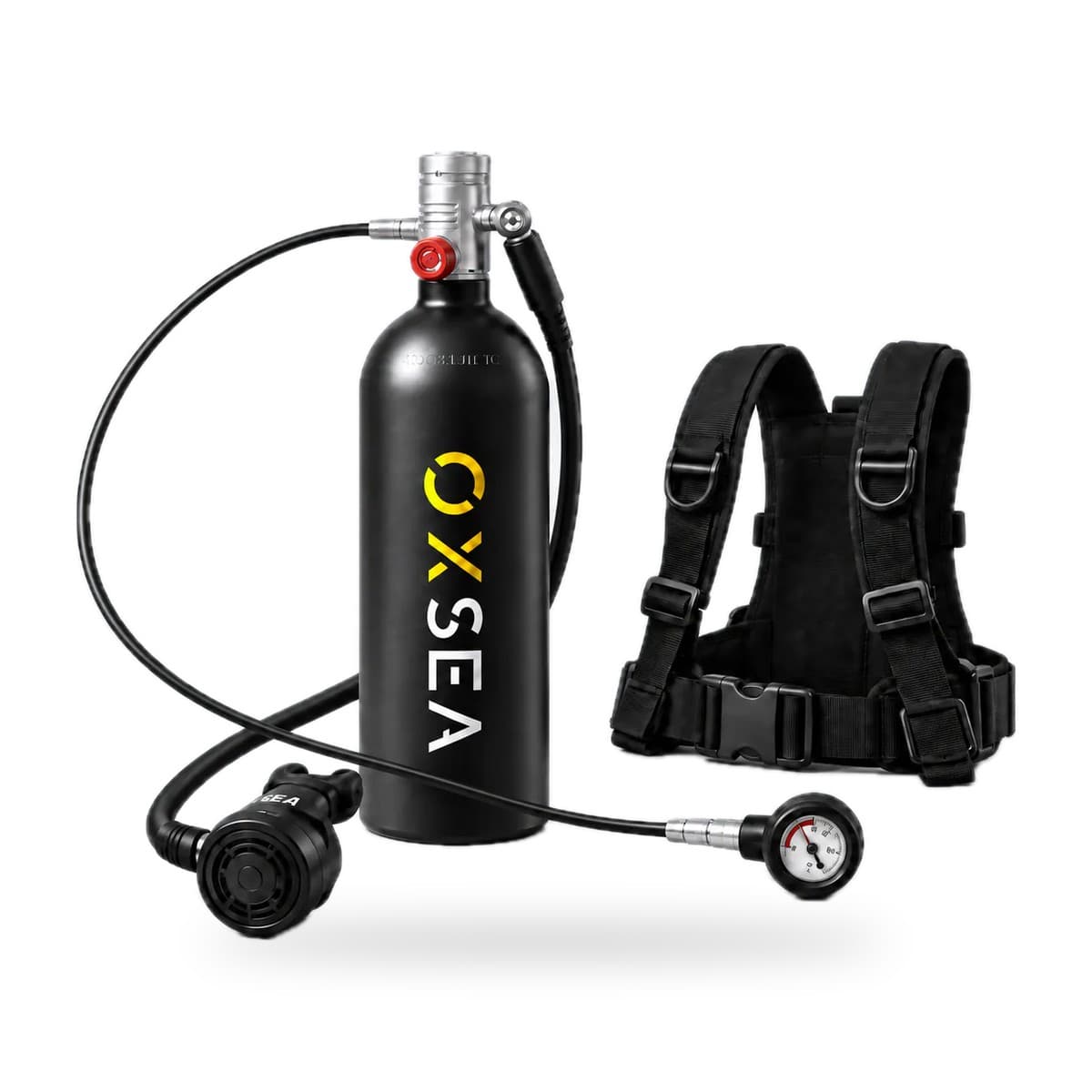
OX2000
2.3 L on your back, 20 to 25 minutes
Which OXSEA mini scuba tank? OX500, OX500Plus, OX1000 and OX2000 compared