
Dive flag rules in Australia: what to fly when you go under the boat with a mini tank
Going under the hull with a small tank makes you a diver to other boats. The Code Flag A, and the distance and speed other skippers must keep, state by state.
Updated 18 October 2026 · 3 min read · by the OXSEA team
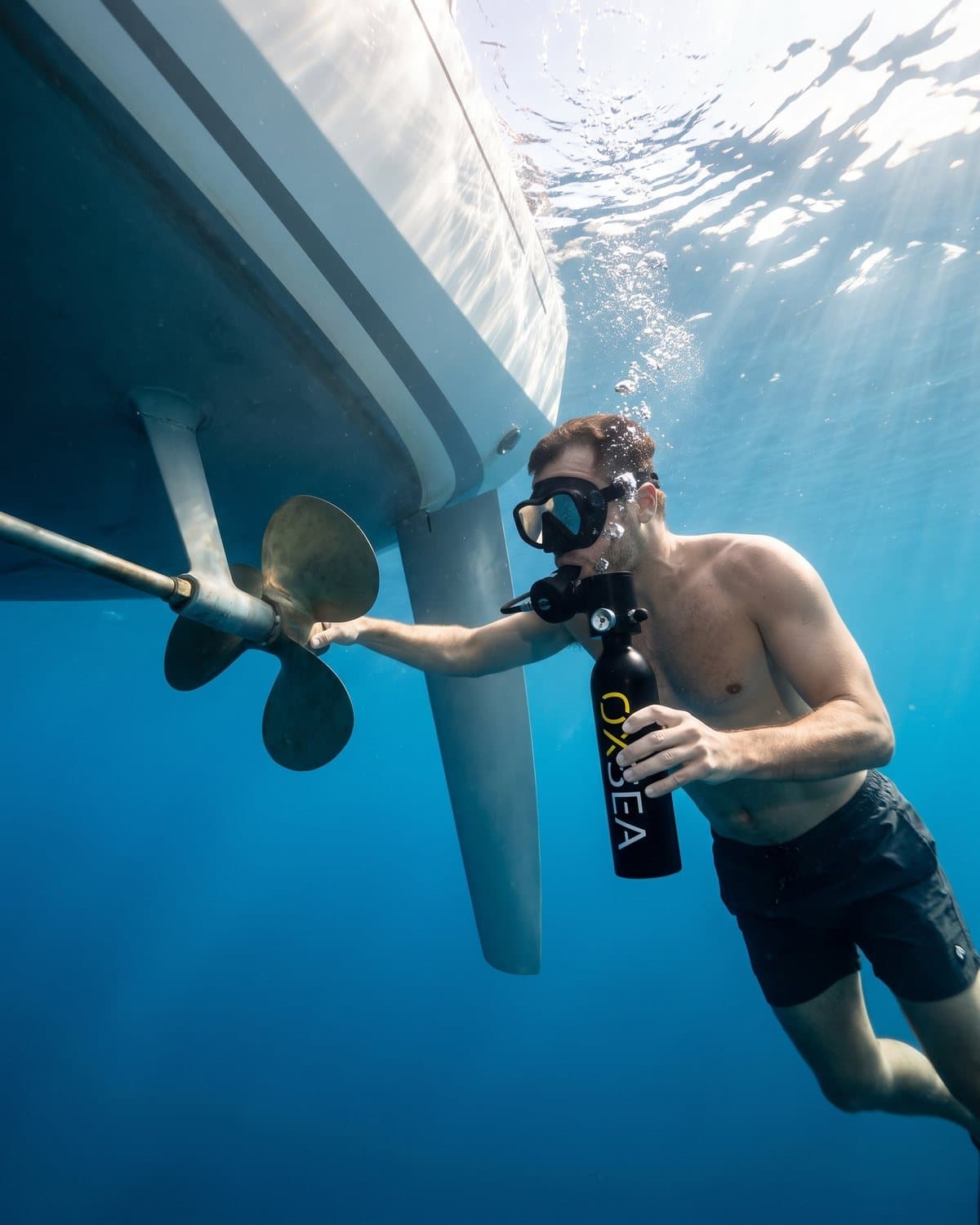
Ten minutes under your own hull at anchor or on a mooring feels like a private job. To the jet ski coming round the point, you are invisible. That is what the dive flag is for, and every state has a rule on how close other boats can come when it is up.
The flag itself
Australia uses the international Code Flag A: white on the hoist side, blue on the fly side with a swallowtail cut. It means "I have a diver down; keep well clear at slow speed". You fly it from the boat, or from a float or buoy above the person in the water.
Size matters in some states. Victoria and Western Australia ask for a flag of at least 750 mm by 600 mm. Tasmania asks for at least 500 mm by 400 mm. The small stickers and pennants sold for kayaks will not do on a boat in those states.
Distance and speed for other boats, state by state
From each state's maritime authority, checked in October 2026:
| State | What other boats must do near a dive flag |
|---|---|
| New South Wales | Stay at least 60 m from people in the water and from dive flags, at any speed. Take extra care within 200 m: divers can be up to 100 m from their float. |
| Queensland | Do not operate within 30 m of a diver when a Code A flag is displayed nearby, unless attending the diver. A 6 knot limit also applies within 30 m of anyone in the water. |
| Victoria | 5 knots maximum within 100 m of a vessel or buoy showing the diver below signal. |
| Western Australia | Keep at least 50 m clear of boats, buoys or areas showing diving signals. If that is not possible, go at the slowest safe speed. |
| South Australia | Slow to 4 knots within 50 m of a vessel or buoy displaying the diver below flag. |
| Tasmania | Do not exceed 5 knots within 120 m of a Code Flag A, or of anyone swimming, diving or wading. |
For the Northern Territory, check the NT Government boating rules before you go: the same Code Flag A applies, and local speed zones vary.
Using it on a boat job
- Put the flag up before you get in, not once you are under the hull. The first minute in the water, while you sort the regulator and your mask, is when you are least aware of what is around you.
- Keep it visible from all sides. Victoria's rules talk about all-round visibility. A flag folded against the bimini helps no one.
- Take it down when you are out. A flag left flying when no one is in the water teaches other skippers to ignore it.
- Leave someone on deck if you can. They can watch the traffic, pass you tools, and keep track of your time.
How long you will be down there
Plan the job around your air. Near the surface and at rest, the 2.3 L OX2000 gives 20 to 25 minutes, the 1 L OX1000 around 15 and the 0.5 L tanks up to 8. Scraping a hull or wrestling with a rope around the prop is hard work and shortens that a lot. Come up with air left on the gauge.
The safety rules do not change because you are only a metre under the boat: breathe continuously, never hold your breath on the way up and ascend slowly. Our safety guide covers them, and our guides on clearing a rope from a propeller and cleaning a hull in the water take you through the jobs themselves.
In the tropical north from November to May, add a stinger suit to the list. Our stinger season guide explains why a marina is no safer than a beach.
Sources
- Transport for NSW, Keeping a safe distance on NSW waterways and the Boating Handbook
- Queensland, Transport Operations (Marine Safety) Regulation and Maritime Safety Queensland, Speed limits
- Maritime Safety Victoria, Diving operations
- Department of Transport WA, Diving
- Marine Safety South Australia, Safety near divers
- Marine and Safety Tasmania, Navigation rules
Rules and local speed zones can change. Check your state's current boating handbook.
The range
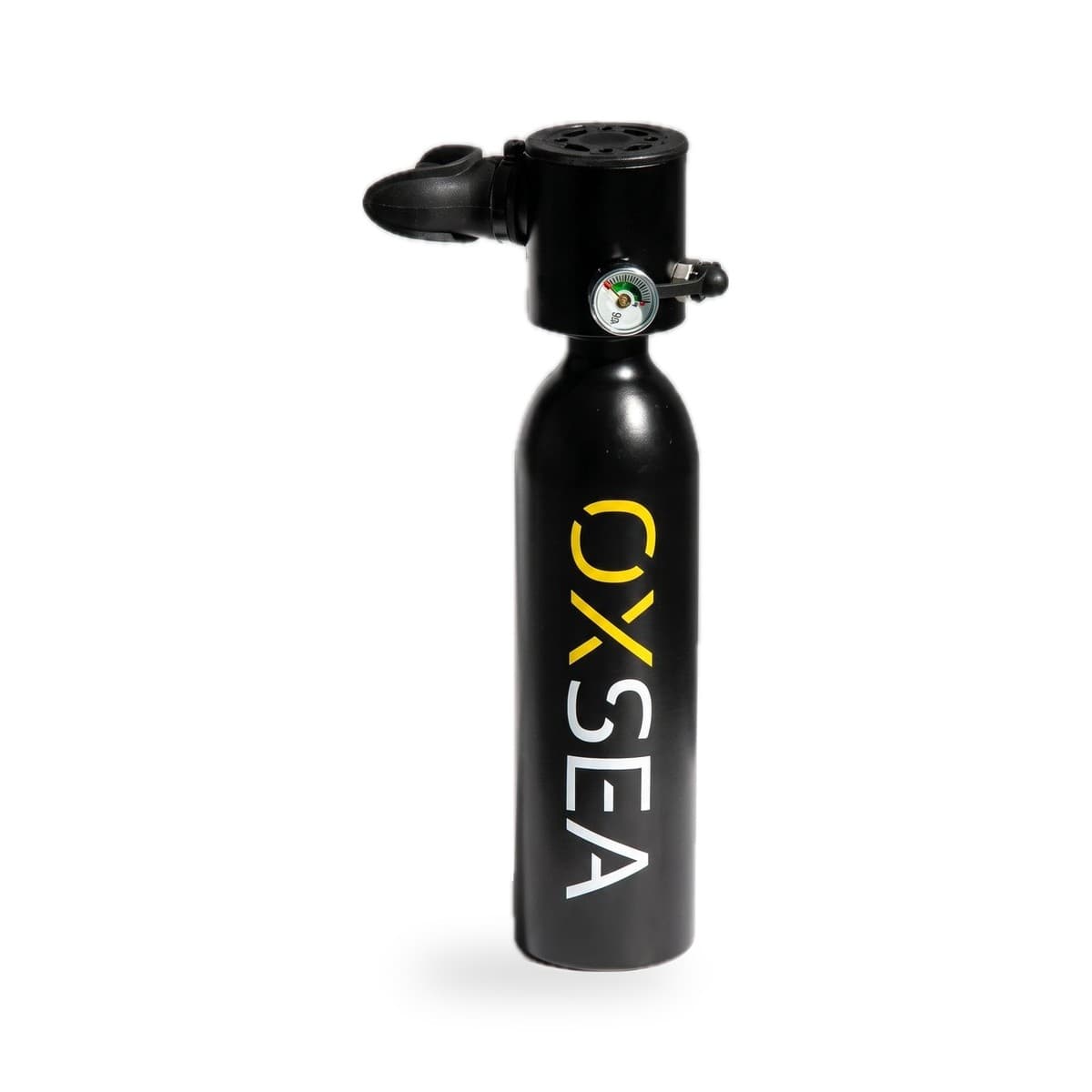
OX500
0.5 L, held in the mouth, up to 8 minutes
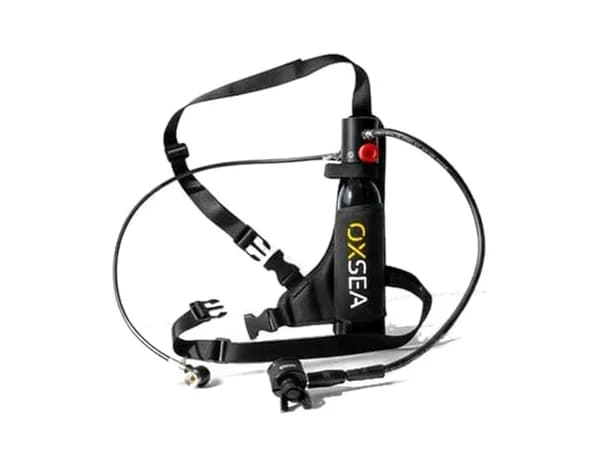
OX500Plus
0.5 L, in the mouth or on your back
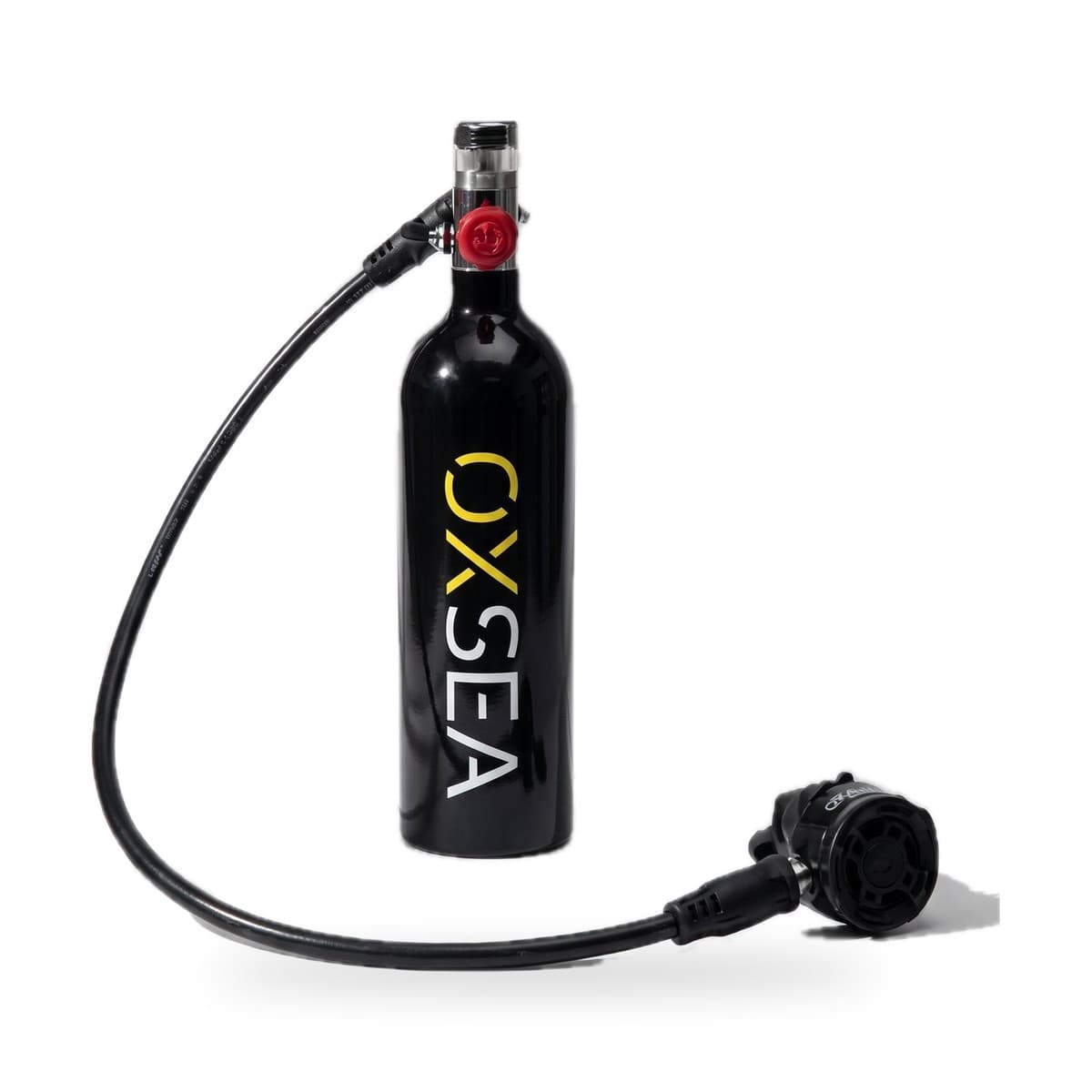
OX1000
1 L on your back, about 15 minutes
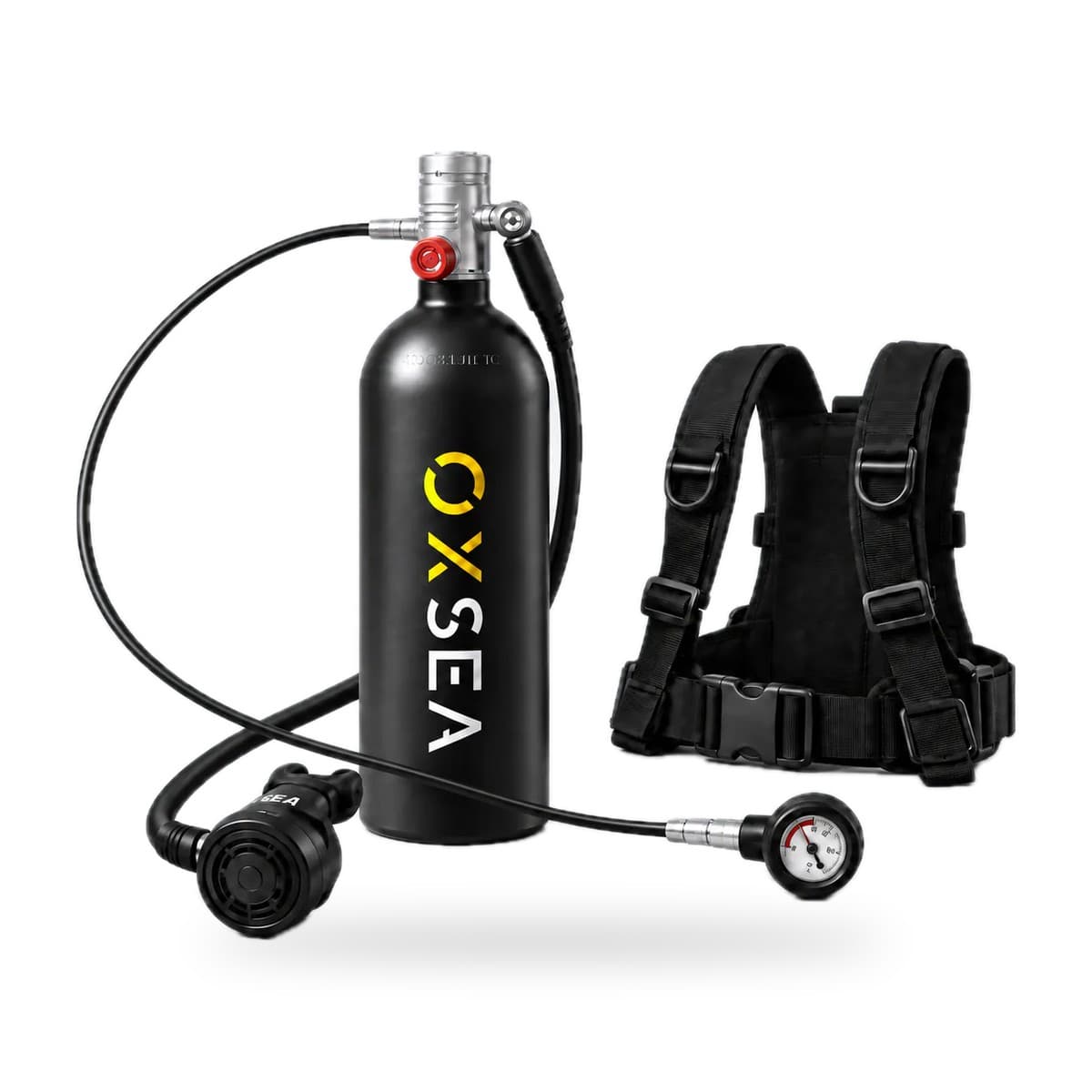
OX2000
2.3 L on your back, 20 to 25 minutes
Which OXSEA mini scuba tank? OX500, OX500Plus, OX1000 and OX2000 compared